
PortaSplit Installation Guide
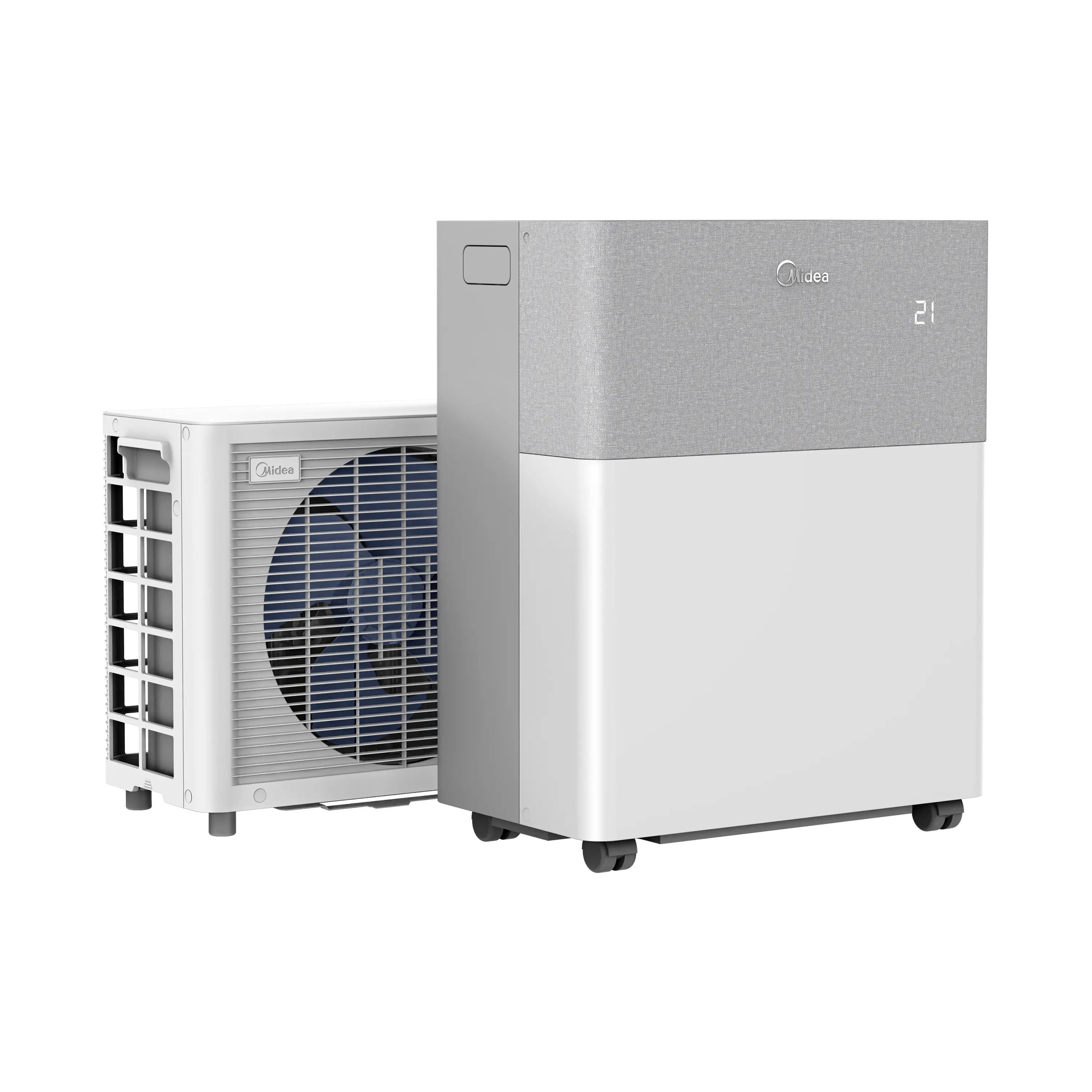
The PortaSplit is designed to be set up yourself using the parts in the box, with no permanent fixing required. Here's a realistic look at what that involves, drawn from the official manual, so you know what to expect before you buy.
Before you start
The PortaSplit is a split system, so installation is really about getting the outdoor unit safely outside while the indoor unit stays in your room. The good news is the kit includes what you need: a mounting bracket, a steel safety rope, a window lock, a sealing cloth and a drainage pipe. The manual also recommends having gloves, a tape measure and scissors to hand.
Check your window first. The bracket is designed for windows that open inwards with a ridge up to 4.5 cm wide and at least 2 cm high, and the window frame and wall must be strong enough to carry the bracket and outdoor unit. If the gap between the window ridge and the outside of the wall is more than about 14 cm, you'll swap in the shorter support legs that come in the box.
Compatible installation scenarios
For heating and cooling, the outdoor unit must be outside. The manual describes a few supported setups:
- Window installation — the outdoor unit mounts on the bracket clamped to your window ridge. This is the typical setup.
- Terrace installation — the outdoor unit rests on a window sill or balcony at least 30 cm deep, secured with the steel rope, with a window lock holding the door or window in place.
- Fan and Dry modes only — these can run with both units indoors, but you'll need a container for the condensation water, which isn't included.
Other setups such as French balconies and roof windows are possible but, according to the manual, need a universal bracket that is sold separately.
Step 1 — Fit the window bracket
Safety first. Attach one end of the steel rope to the eyelet on the bracket and the other end to the eyelet at the back of the indoor unit, so nothing can fall. Place the clamp area of the bracket over the window ridge and pre-tighten the screws for some stability. Release the locking pins, extend the support legs until the feet meet the wall, keep the bracket close to level (within about 2°), then tighten the clamp screws until it's firmly fixed. Hold the bracket with one hand throughout — the manual stresses it must never be left unsupported during installation.
Step 2 — Mount the outdoor unit
Lift the outdoor unit with both hands using the handles, never by the hose. On its underside are guide pins that line up with holes in the bracket. Position your hands on the sides, in the middle of the unit, and push it forward slowly without tilting until the pins snap into place with a click — check they've passed through the bracket so the unit is locked and can't lift up. Give it a gentle test push to confirm. Only once it's secure should the steel rope be removed from the bracket, and only then turn the power on.
Step 3 — Position the indoor unit
Give the indoor unit room to breathe: the manual asks for at least 25 cm of clearance behind it and 50 cm above, and never block the air intakes or outlets. The unit rolls on wheels, so it's easy to nudge into place, and you can lock it down with the included rubber wheel stoppers once you're happy with its position. Keep the indoor unit indoors only — it's not designed for outdoor use.
Step 4 — Seal the window
To stop warm outside air sneaking back in, you have two options that ship with the unit. The window lock is the quicker route: stick one mount on the frame and one on the sash, thread the strip through, and fold it back on itself to minimise the gap. For better insulation, fit the window sealing cloth instead — clean the frame, measure and cut the hook-and-loop strips to the sash and frame, align the cloth (its wider edge goes on the frame), and pass the hose through its zip. A sealing sponge is included to keep rainwater from running along the hose.
Step 5 — Condensation water and power on
During both cooling and heating, the outdoor unit drains condensation from an outlet at its base. Click the supplied drainage pipe into that outlet and route it to a suitable spot, always keeping the hose lower than the outlet so water flows away; the hose can be fed through the groove in the bracket to keep it tidy. The indoor unit produces condensation too, but it's collected and pumped to the outdoor unit automatically — the indoor unit also has a manual drain plug you can use before storage. In heating mode, water can collect on the hose between the units; the manual suggests checking it regularly and wrapping it with the supplied insulation sponge. With everything in place, plug directly into an earthed wall socket and you're ready to run.
Deinstallation and storage
Taking the unit down follows the reverse logic. Place the protection plate on top of the indoor unit, press in the locking pins on both rails and pull the guides towards you to release the outdoor unit, then lift it off by the handles and rest it on the protection plate. With most windows you can still close the window with the bracket in place; to remove the bracket, reattach the steel rope, unscrew both screws and lift it inside, holding it with at least one hand. Before storing, clean and refit the dry filter and remove the remote's batteries. The manual recommends storing the outdoor unit upright.
Common mistakes to avoid
- Lifting or carrying either unit by the hose instead of the handles
- Turning the power on before the outdoor unit is properly secured
- Letting the drainage hose sit level with or above the outlet, so water can't drain
- Using an extension lead or multi-plug adapter instead of a wall socket
- Blocking the air intakes or outlets, or skipping the 25 cm and 50 cm clearances
- Leaving the bracket and outdoor unit mounted during thunderstorms or strong winds
Safety notes from the manual
- Secure the bracket with the steel rope before installation, and keep one hand on it the whole time.
- Only use the included accessories and specified parts; the wrong parts can cause leaks, shock or fire.
- The refrigerant circuit is sealed at the factory — never open it. Only a qualified technician should work on it, and a permanent installation or extended refrigerant lines must be done by a professional.
- Don't install where combustible gas could leak, and keep the room well ventilated.
- Remove the bracket and outdoor unit during thunderstorms or strong winds, and check fasteners regularly.
Next steps
Something not working as expected? Head to troubleshooting, or check the full specifications.
Cooling Choice is an independent buying guide. It is not affiliated with or endorsed by Midea or any manufacturer. Always follow the instructions supplied with your unit.